The Savage Mountain

The Russians are the toughest people, probably more than anybody else, but this time they’ve gone too far to demonstrate it…
This year a team formed by several prestigious Russian eight thousanders attempted what as of today is probably the most ambitioned climbing record, sadly yet to be achieved…

K2 is known as the Savage Mountain due to the difficulty of ascent and the second-highest fatality rate for those who climb it. For every four people who have reached the summit, one has died trying. And it’s said that whoever attempts to climb it doesn’t descend without paying its toll. It might be frostbitten body parts or the live of you climbing partner that you have to leave behind.
Unlike Annapurna, the mountain with the highest fatality rate, K2 has never been climbed in winter.

The Russian Expedition has lost few of its team members in the last few weeks, due to severe frostbite in hands and feet. And yesterday Vitaly Gorelik died in his tent at basecamp when his heart stopped beating after four days clinging to life. I don’t think many people can understand how extreme the conditions are up there, and how severe the suffering for each one of these tough Russian mountaineers has been for the last few weeks, while they tried to conquer one on the most extreme climbing challenges yet to be achieved.

May his soul rest in peace…

422426_10150562402202914_325293824_n

Our climbing plan

This is our climbing plan for my beautiful 7000, and it looks so exciting! Insane I must say :S

There are many ice walls and crevasses between BC to Camp-1, especially closed to Camp-1.
From ABC to Camp-1, we’ll need to find the exact route and fix the rope for rest of the members. It takes time to find the route among the ice walls and crevasses. We’ll need at least 500 to 700m rope, ice screws and snow bars. We’ll also carry 2 ladders in case crevasses become bigger.
It takes between 4 to 7 days to cross and reach Camp-1.
ABC should be between BC to Camp1. After that, all members should move to camp-1,
Individual climbers or HA porters can’t go back to BC to get food or for rest, because it’s too dangerous to come back to BC alone or even two person. Therefore we’ll need to carry the food and the entire stuff needed in Camp1, and so it is better to set BC in Camp-1 for all climbers, instead of coming down to BC again and again to take the food, which is a high risk. Once Camp-1 is established, then we can easily summit.
There are some crevasses until the summit and we’ll have to find the route again, but it’s more easy.

passu glacier

Preparing my ascent to Passu Peak

Technical climbing, this is an obstacle race to an ice dome on the top of Batura Muztagh. On the first few days of climbing from Basecamp to Camp 1, we’ll ascend 950m of ice, hidden crevasses, and ice shoulders. Then we´ll gradually sail through an ocean of ice between Camp 1, 2 and 3, and after that we’ll have to negotiate our final push to Passu Peak summit on a technical climb, finding crevasses again, and some mixed climbing. The ice flow does not stays the same every year, especially considering the global warming, and our success going across all crevasses will mostly depend on the snow conditions.

Getting ready for this climb is going to be the most challenging thing I’ve ever done in my life. There is a long way ahead to get ready for this challenge, and considering all different factors that come into play, I have to trace a plan for long term success on this climb that will also open the door to my success climbing a big 8000 next year:

· Fitness: This is a high altitude expedition, where we are expecting days of very hard and sustained work for up to 12 hours under extreme weather conditions. On the first stages from Basecamp to Camp 1 I’ll need to carry loads of around 25 kilos. On our final push to the summit we’ll be moving through the frontiers of what in mountaineering is called the Dead Zone, altitude above a certain point where the amount of oxygen is not high enough to sustain human life. In the dead zone I’ll need to breath around 15 times for each step to be taken, and in just 8 hours I’ll burn around 12000 calories, which is 10 times more than the amount burned on a regular day. A very specific training plan covering both the physical and technical aspects of the climb must be elaborated and complemented with a diet and support from a doctor to make sure everything is in order before departure.

· Teamwork: Having a strong team in place will be the most fundamental part of the engine driving me up to the top of my mountain. Team member must have the required fitness and technical levels in order to secure a safe and successful expedition. This climb to Passu Peak has the particularity that individual climbers in the team can’t go back to Basecamp to get food or for rest, because it’s too dangerous and costly in terms of time and energy. Therefore one member on the team getting affected by altitude sickness or any other issue, will force the whole team to abort the expedition. For the same reason we are planning to move all stuff from Basecamp at 4100m up to Camp 1 at 5050m, instead of coming down to BC again and again. This mean we´ll have to work very efficiently as a team distributing tasks such to opening the route and secure it, while carrying all stuff that will make a continuous stay at high altitude sustainable. Finding the right team member with similar levels, aspirations and enough time and money, is becoming the most difficult part of this expedition.

· Logistic: This is by far the most complex adventure I ever managed to lead when it comes to setting up all logistics. There are tasks of all sort of colors and flavors, and a gigantic amount of time and effort to be spent from the very first day I decided to embark in this venture. From looking for detailed information on the Peak and climbing routes, sources of weather prediction, buying and testing the right gear and community equipment, to liaising with local companies and handing over to them most of the paperwork, road transfers, hotels, food provisioning, helicopter rescue hiring, etc..

· Risk and fear management: This is a technical climb with many factors that will seriously affect our safety if we are not physically and mentally prepared to confront the risks and mitigate them. Training to progress on ice and mixed terrain, and having excellence on self-rescue techniques plus practicing it with the team during our first stages of the expedition, will make us feel stronger and being able to manage the fear when we come across difficult situations. Feeling physically strong and having the best climbing gear and equipment is also fundamental to feel capable of breaking or mental limits and having a safe and happy trip up to the summit and back home.


In this blog I want to share all sort of information about the plan and how to execute it, making especial emphasis on the tools I use to work through all logistics and communicate with people involved in the expedition, and how is my approach to work through all problems we all encounter when embarking in a big expedition.


IMG_2484

Good luck happens when Preparedness meets Opportunity

This is one of my favorite quotes from my Famous Luck Quotes Collection. I’m so tired of hearing friends and family saying how lucky I am, that one day I decided to put together a bunch of luck quotes and shared then on my social networks on a daily basis. Preparedness and Opportunity are two concepts that I want to blog about in this forum.

Preparedness …

For a climber 50% of success comes along with preparation, 50% weather conditions and some other external factors. Up there, in these gigantic mountains there is no room for little mistakes, and to avoid them there is always a long process of preparing every single ascent. Some of these mistakes cannot be mitigated, but they can be easily avoided by investing the right amount of time and effort on preparation

Of course for a mountain climber being successful on an expedition means summiting the mountain/s and going back home safe and happy. I can spend hours talking about this, especially because most times the success is not only rated by how many meters you ascended, or whether or not you reached the top of you target. And we can also spend hours talking about what is the meaning of being successful for a PFE on his/her expedition…

In this blog I want to talk a lot about preparedness for big expeditions.

So what an expedition is all about?

A – Getting up to the top of one peak by using one specific technique and style previously selected according to different factors, mainly our technical expertise, but also how we want our success to be rated based on how previous summits to the same peak were achieved.

B – Climbing one peak up to the point where we think we gave our best, we made good progress on our learning journey as climbers, we made good friends, we got to know more about the local culture and mother nature, AND we got to know more about ourselves

IMG_8956_3F28009CIMG_8959_1_3F28009C

Passu Peak Expedition 2012

Two summits of a very unique Peak, very rarely climbed, in the Heart of the Karakoram mountain range in Pakistan. The first one is Passu Diar (7295m), and its first summit was done on 1998, very beautiful almost virgin peak… The second is Passu Sar (7478m) and it was first climbed on August 1978, very especial date for me since I was only three months old by that time. On this expedition we are going to attempt a combined climb of both summits on the 34 anniversary of it first climb, three months after my 34th birthday.

Passu Sar (“Passu Dome”, “Passu I”, West Summit, 7478m, 24528ft) is a mountain peak in the Batura Muztagh, a sub-range of the Karakoram mountain range, located in the Gilgit District of the Northern Areas of Pakistan, west of the Hunza Valley. It is the highest point of the Passu massif, which also includes Passu Diar (“Passu East”, “Pasu II”, “Peak 55”, East Summit, 7295m, 24933ft). The peak lies on the main ridge of the Batura Muztagh, about 7 km (4 mi) east of Batura-I (“Batura Sar”, 7885m) surrounded by Shisper (7619m), Balter peak (7400m) and Kampir Deyor peak (7611m).

It’s located about 100km beyond the China border and 150km from Gilgit, between Batura glacier (the 6th longest glacier of the world) Passu glacier, Ghulkin glacier, and Kamaris glacier.

According to Wikipedia my goal has only been accomplished once…

Passu-Peak_2_3691934E

How to make my dream come true

My name is Javier, from Spain but based in Dubai, and besides being a Senior IT Engineer, I’m a very passionate climber always looking for challenges to give the best out of me on all diverse adventure sports I practice regularly. I spend most of my free time out of work enjoying all forms of climbing (sport, rock, ice, alpine) all around the World, riding my Harley or my KTM desert motorbike in the dunes, exploring the desert with my Jeep, paragliding in the desert… but my real passion is high altitude climbing, and participating on complex expeditions to the most challenging peaks on Earth.

Last year 2011 I climbed and summited Island Peak in Nepal (6189m), Mt Rainier in the States (4392m), winter climb of Korma Kooh in Iran (4020m), and winter climb of El Naranjo de Bulnes in Spain (2519m). I have also experience climbing many other peaks around the world. This year I’m looking to summit my first 7000 as one more step on the preparation for climbing a big 8000 next year, most probably Everest, which is my dream…

I’m also an IT Geek, and as many of my peers I love exploring the market seeking for new gadgets that I can use during my adventures. I use every piece of technology that can help organizing my adventures and improving my chances getting to up to the summit of my beautiful peaks…
Today I want to start blogging about the challenges I have to face when doing something that seems quite simple, but it can become a full time job: organizing an expedition to climb a remote and unique peak, getting the best out of our tools  to avoid little mistakes that can ruin the whole dream, building training schedules, food diaries, gear inventory, engaging board services on base camp, blogging from basecamp up to the summit… and coming back safe and happy to tell the story and getting ready for the next extreme challenge.
This blog is not only about my story of how to climb a big 8000, but also about the true spirit of PFE, how to overcome our limits by working towards clear targets with passion and determination. This blog is a gateway to share the story, getting support from my colleagues, and sharing ideas on how to use our tools to make my dream come true.

IMG_2531

The three goals of a mountain climber

#1 – Come back save: Achieved!
#2 – Come back with new friends: Achieved!!
#3 – Come back with the summit: ACHIEVED!!!

Mt Rainier is my first volcano and the most beautiful mountain I’ve ever climbed…. Nepal cannot be compared with anything, but this gigantic volcano (14411ft – 4392m) has challenged me up to my limits and amazed me with the immensity and beauty of its 36 glaciers and huge steaming crater!

http://en.wikipedia.org/wiki/Mount_Rainier

288159_10150248255167914_12178_o

Mi aventura en el Himalaya – Diario de la Expedición

Dia 1 de la expedición: Estoy en un albergue en Monjo de camino al Campo Base del Everest, esperando la cena. De momento todo perfecto. 2840m de altitud, 15km


Dia 2: Namche Bazaar a 3440m en el Parque Nacional Sagarmatha hogar del Everest. 800m de ascenso, 11km, 3C sol. Mañana subo 400m y vuelvo a bajar para aclimatar


Dia 3: Sigo en Namche Bazaar. Para aclimatar he hecho 800m de ascenso acumulado, 830 descenso, 16km. 6C sol. Increibles vistas del Everest, Nuptse, Lhotse y por primera vez he visto una pizca de mi pico Island! Mañana asciendo 400m hasta Tengboche despues de descender 800m. Gracias a todos por los ánimos!


Dia 4: Tengboche 3720m. 740m de ascenso acumulado, 240m descenso, 16km, 9C nublado. Un dia duro y me encuentro muy flojo… Mañana subo 400m hasta Pheriche


Dia 5: Periche 4220m. 890m de ascenso acumulado, 520m descenso, 15km, -1C nublado. He subido hasta 4570m y por primera vez he visto mi pico entero, es precioso!


Dia 6: Lobuche 4860m Un día durísimo con vientos gélidos y ascenso hasta 5000! 1600m de ascenso acumulado 914m descenso, 12km. La falta d oxigeno es un suplicio


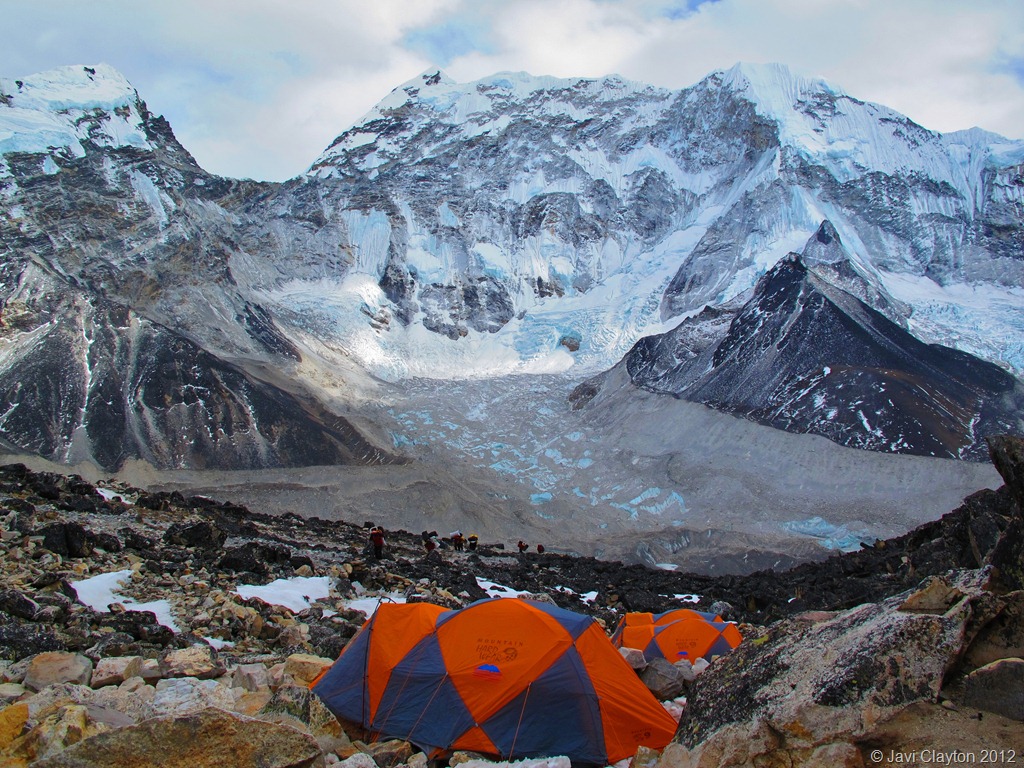
Dia 7: Campo base del Everest 5364m el sitio más lindo del Planeta! 580m ascenso acumulado 340m descenso 13km. Estoy agotado pero feliz por lo q he contemplado

Mañana escalo mi primer pico en el Himalaya, Kala Pattar 5545m pero estoy sufriendo mucho y tal vez tenga q cancelarlo y esperar a mi Pico Island. Gracias todos


Dia 8: Hoy escale Kala Pattar 5545m y he descendido a Dingbuche 4325m para reponerme antes de atacar mi pico Island. 622m ascenso acumulado 1175m descenso 20km

Hoy he escalado mi primer pico en el Himalaya 5545m. Nunca pensé q sería tan duro pero las vistas te arrancan lagrimas mientras te esfuerzas por inhalar oxigeno


Dia 9: Comienza mi aproximación al Pico Island y no tendré cobertura para seguir enviando sms a Facebook. En 3 o 4 días informare del resultado. Desearme suerte


Dia 10: Después de una noche de nervios y preparativos en Thukung 4770m, hemos montado el campamento base a 5140m. Mañana nos movemos al de altura a unos 5500m


Dia 11: Campamento de altura 5500m. Un día muy malo con muchísimo viento y ahora nevando. A la 1am saldremos para intentar cumbre. Muchos nervios, a ver q pasa


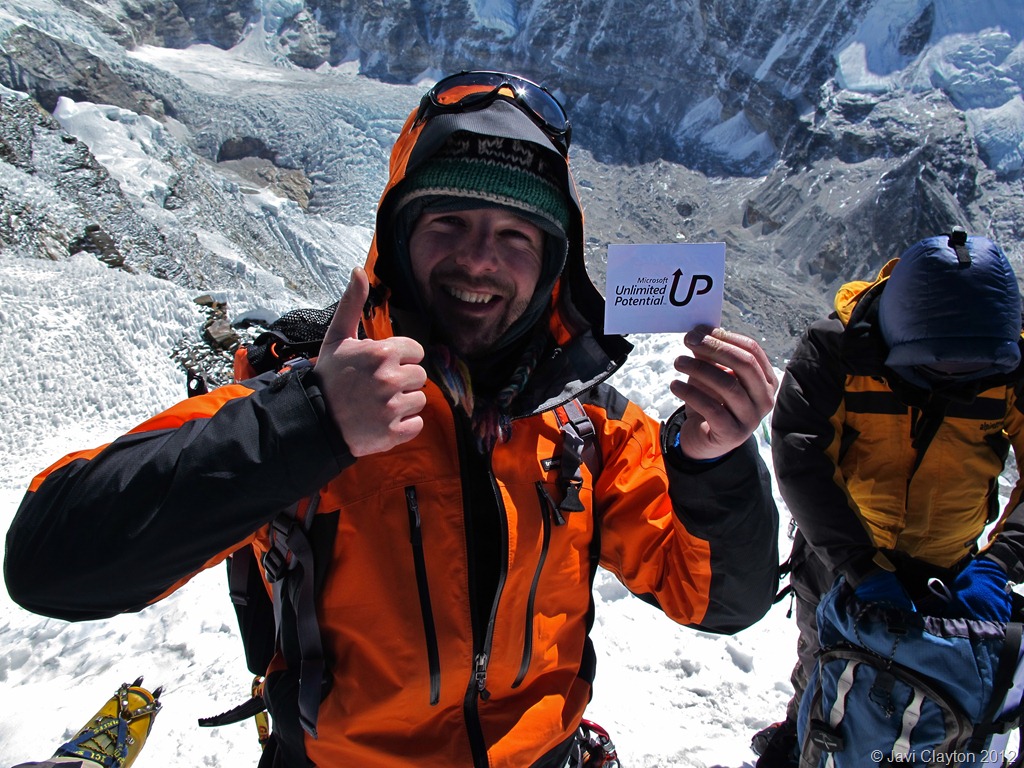
Dia 12: Lo conseguí! Hoy día 21 a las 9.30 de la mañana he hecho cumbre en el Pico Island a 6189m de altura. Ha sido el trabajo más duro de mi vida con 11h d escalada continua por la noche y con gélidas temperaturas pero me siento muy feliz. Gracias a todos los q me habéis animado. 5 días y estaré en casa

Dia después de hacer cumbre: Filete de yak y cervezas Everest para celebrar el exito de lo q considero la experiencia más exigente y apasionante de mi vida. Desciendo a un ritmo durísimo de 2000m diarios en 8h, pero pronto estaré en casa y con una sorpresa para mi familia y amigos q son lo mejor q tengo.


Dia 13: Luckla, con el espiritu alegre por el chang y tumba preparados por una humilde familia Sherpa, esperando coger una avioneta de vuelta a la civilizacion

Ultimo día de la expedición: Estoy en Khatmandu después de un vuelo de película en una ruinosa avioneta. Hoy por primera vez leo todos vuestros comentarios desde un cibercafé. Hasta ahora solo podía actualizar mi estado via sms, pero no podía leer vuestros comentarios. Estoy muy emocionado así que he decidido regresar a casa un día antes y prometo escribiros a todos para agradeceros vuestras palabras de ánimo. Físicamente estoy hecho pedazos, pero anímicamente me siento mejor que nunca. Muchas gracias de corazón…

MY ADVENTURE IN THE HIMALAYAS – CLIMBING THE ISLAND PEAK

The Island Peak (6,189m) is located at the heart of Khumbu region and it’s a popular climbing peak in the Everest area. Island Peak was the name given to the mountain in 1952 by Eric Shipton’s who thought it to be reminiscent of an island in a sea of ice. It was renamed “Imja Tse” in the early ’80s, though its original name is still more popular. This adventure with Island Peak trekking and climbing will take me into the heartland of the Khumbu Valley, Everest Base Camp (5,357m) and Kala Patthar (5,545m). The journey begins from and comes to conclusion at one of the most famous airstrip in the world, the Lukla Airport in the Everest Region.


Day to Day Itinerary:

■ Day 01 (Tuesday 08 March 2011) – Flying from Dubai to Kathmandu, Nepal

■ Day 02 (Wednesday 09) – Sightseeing and preparation

■ Day 03 (Thursday 10) – Flight from Kathmandu to Lukla

■ Days 03 to 09 (Thursday 10 to Wednesday 16) – Trek to Everest Base Camp

■ Day 10 (Thursday 17) – Visit Everest Base Camp

■ Days 11 to 12 (Friday 18 to Saturday 19) – Trek to Island Peak Base Camp

■ Day 13 (Sunday 20) – Island Peak High Camp

■ Day 14 (Monday 21) – High Camp to Summit and back to Chhukung

■ Day 15 (Tuesday 22) Reserve day

■ Days 16 to 17 (Wednesday 23 to Thursday 24) – Trek to Lukla

■ Day 18 (Friday 25) – Fly to Kathmandu

■ Day 19 (Saturday 26) – Fly back to Dubai


Detailed Expedition Itinerary:

Day 01: Arrival Kathmandu [1,350 m]

Upon my arrival in the Kathmandu airport, I will meet with the organization I hired to do this Expedition. After completing all custom formalities (Visa, etc) I’ll pick up my luggage before getting a transfer to Hotel Shanker. After check in I’ll hang around in the city, and visit some tourist offices for climbers. In the evening I have been invited to a “Welcome Dinner” at a traditional Nepalese Restaurant.


Day 02: Kathmandu [1,300 m]: Sightseeing and Preparation

After breakfast, I will enjoy a free day doing sightseeing. After some hours visiting popular sites of Kathmandu and doing some shopping, I’ll meet the climbing leader to get my equipment checked, prepare things as per need, introduce with fellow climbers, and getting a briefing about the trip. Overnight at hotel.


Day 03: Kathmandu – Lukla [2,800 m] – Phakding [2,652 m]

Early morning I get transferred to domestic airport and fly to Lukla. After an adventurous 40 minutes flight on crappy aircraft above breathtaking green and white mountains, I reach Tenzing-Hillary Airport at Lukla. This is supposed to be one of the most beautiful air routes in the world culminating in a crazy landing on a hillside surrounded by high mountains peaks. At the airport, we meet our other crew members while the guide divides and manages baggage to be carried by porters. We start our trek through the village of Lukla until we reach Phakding. Overnight in Phakding.


Day 04: Phakding – Namche Bazaar [3,440 m]

Trek starts in the morning after breakfast. The walk today has multiple crossings over Dudh Koshi River and magnificent view of Mt. Thamserku (6,608m) from the Benkar village before reaching the entrance of Sagarmatha National Park at Monjo, where our trekking permits are checked in order to keep record of trekkers and local trekking staffs as well. A descend walk brings us to Jorsale, the last village until Namche Bazaar. As we climb up hill towards Namche Bazzar, we enjoy a close view of Kwangde Peak, Kusum Kangaru, Mt. Everest, Lhotse and Tawache. Finally, we reach the village of Namche Bazzar, the main gateway of Khumbu region. Overnight in Namche Bazzar.


Day 05: Namche Bazaar [3,440 m]: Acclimatization Day

This is first scheduled ‘acclimatization’ day for this trek. Health experts always recommend us to stay active and moving during the rest day too instead of being idle. We either spend the time taking a day hike to Thame or visiting Khunde or carry out relaxed exploration of Namche Bazaar itself. Namche Bazzar is the main centre of the Everest (Khumbu) region. We also take a side trip up to Khumjung and climb up to famous airstrip at Syangboche. Overnight in Namche Bazaar.


Day 06: Namche Bazzar to Tengboche (3,870m)

After breakfast in Namche, we start our trek towards Tengboche enjoying superb view of Mt. Everest, Nuptse, Lhotse, Ama Dablam and close up view of Thamserku. The trail goes gradually down up to Kayangjuma. The path eventually reaches Sansa which is the major trail junction to Gokyo valley and Everest Base Camp. The track then follows through the pine forests and after we cross a bridge over Dudh Koshi River, to reach Phunki Thenga, a small settlement with a couple of teahouses where we have lunch before we reach Tengboche. Tengboche has the biggest Buddhist Monastery all over in Khumbu region. Overnight stay at lodge in Tengboche.


Day 07: Tengboche to Pheriche [4,200m]

We will cross a traditional and cultural Sherpa village Pangboche where we can see a close up daily activities of Sherpa people. After this, we make a gradual up towards a small hill while trail goes to wide mountain valley called Pheriche. Over night stay at Pheriche.


Day 08: Pheriche to Lobuche [4,930m]

After breakfast, we make a gradual walk-up to reach Dugla. Beyond Duglha we trek up the steep terminal moraine of the Khumbu Glacier. We ascend Chupki Lhara. By this stage the effects of the altitude will be kicking in and we can feel colder nights. Overnight in Lobuche.


Day 09: Lobuche – Everest Base Camp [5,364 m/] – Gorak Shep [5,170 m]

Take the trail to Everest Base Camp through the Gorak Shep Lake. Every year the trail changes due to the movements of the glacier. The walk is quite strenuous due to thin air in high altitude, until we reach the Everest Base Camp, where we spend part of the day. We get back to Gorak Shep for a good night’s rest. Overnight in Gorak Shep.


Day 10: Gorak Shep – Kala Patthar [5,545 m] – Lobuche [4,940 m]

We start early in the morning and, we need to get prepared for dark and cold temperature (-10 to -14 C). Plus there is always the likelihood of chilly winds. Familiar peaks such as Lingtren, Khumbutse, Changtse can be contemplated during several hours of an ascent to reach Kala Pattha summit (5,545m). On being back to Gorak Shep, we have breakfast followed by a gradual descending down to Lobuche for a good night’s rest. Overnight in Lobuche.


Day 11: Lobuche – Kongma La (5,535m) – Chhukung [4,730m]

After breakfast, trekking via Khumbu Glacier to Kongma La Base Camp (5,000m) continues ascending to Kongma pass. After gaining the Kongma La, we descend a gradual walks up the Imja Khola valley to Chhukung, a small summer settlement. Overnight in Chhukung where we make final preparation for Island Peak Climbing.


Day 12: Chhukung – Island Peak Base camp [5,200m]

The path from Chhukung leads fairly way climbing to the southern flank of the moraine from the Lhotse Glacier. The route to the Amphu Lapcha through the Imja and Lhotse glacier moraines leads to a wide valley flanking the SW side of Island peak. Overnight at Island Peak Base Camp.


Day 13: Island Peak Base Camp to High Camp [5,600m]

We move to Island Peak High Camp. Overnight in Island Peak High Camp.

We might attempt for Island summit in one push directly from the Base Camp where we spend two nights for acclimatization and training. It’s also easier for the porters to stay at the Base Camp instead of staying at a higher altitude at High Camp for a long time which might cause altitude problems.


Day 14: High camp – summit Island Peak – Base camp – Chhukung

Island Peak Ascent (6,189m): We begin our climb early in the morning, generally around 1 AM. In the beginning, we climb the rock gully. There are several short rock steps to climb before we emerge on the right side of the gully. The route then follows a ridgeline, which leads to an exhilarating and exposed traverse onto the snout of the summit glacier. We need to rope up for the glacier as it contains several crevasses. A steep snow slope leads us onto the summit ridge. After enjoying the summit views, and taking pictures, we descend all the way to Chhukung for overnight and to celebrate on our success Island peak climb.


Day 15: Reserve Day for Contingency

There is no such guarantee that we can get quite a favorable weather on our planned day for the summit (day 14), so this day is used as a contingency in case if we are unable to summit the Island Peak on day 14 due to bad weather condition or some other reasons


Day 16: Chhukung to Namche Bazar

This is a long trekking day. The Imja Khola joins the Dudh Koshi River a little above the Pangoche village. There is a famous gompa at Pangboche believed to have been the oldest in the Khumbu region. Descend out of the alpine dessert and back into landscapes of pine forests. The path leads to a steep uphill climb into Tengboche. Visit the Tenboche Monastery. Making a steep descent leads back to the Dudh Kosi river. The final steep climb traverses the hill side into Namche Bazaar. In case our contingency day remains unused and you want take today’s trekking in a relaxed manner, we can divide today’s long trekking into two days.


Day 17: Namche Bazaar to Lukla

The trail descends steeply downward so we need to walk slowly and under control as our shaky legs continuously battle the rocky terrain. After crossing the suspension bridges over the fast flowing Dudh Koshi and its tributaries the trail becomes more level and natural. Walk through the Sherpa villages’ noticing impressive faith in Buddhism and culture of prayer stones and prayers flag while we walk through the villages. On arrival at Lukla, we experience the culmination of a fantastic trek on a happy note with everyone back safe with smile on our faces. Overnight in Lukla.


Day 18: Fly back- Lukla to Kathmandu

We fly back to Kathmandu after our long mountain journey. The early morning flight drops us at Kathmandu. Time for shopping and exploring other areas of Kathmandu. We will be having a fantastic celebration dinner together for successfully completing the adventure. Overnight in Kathmandu.


Day 19: Farewell Friends